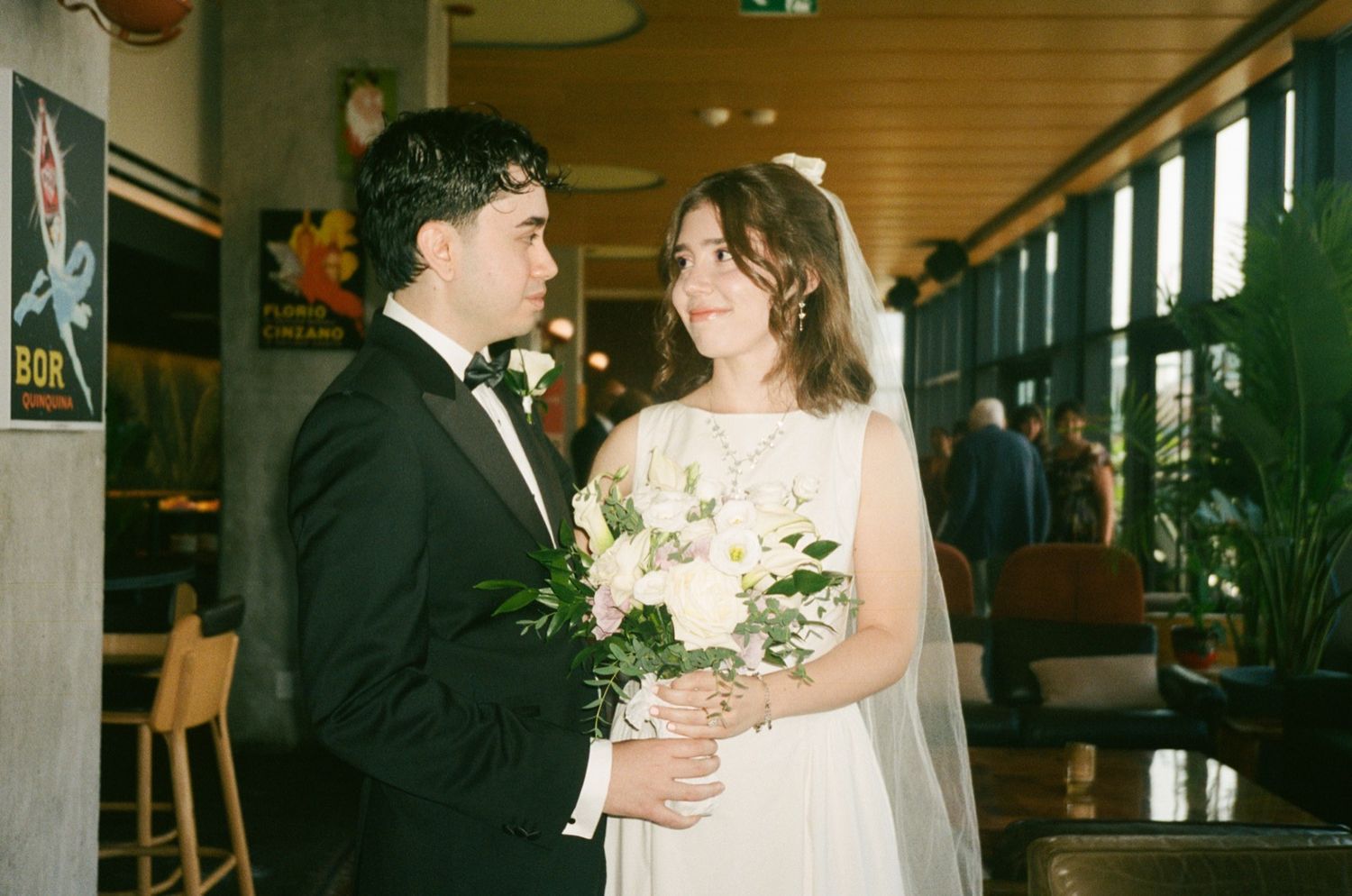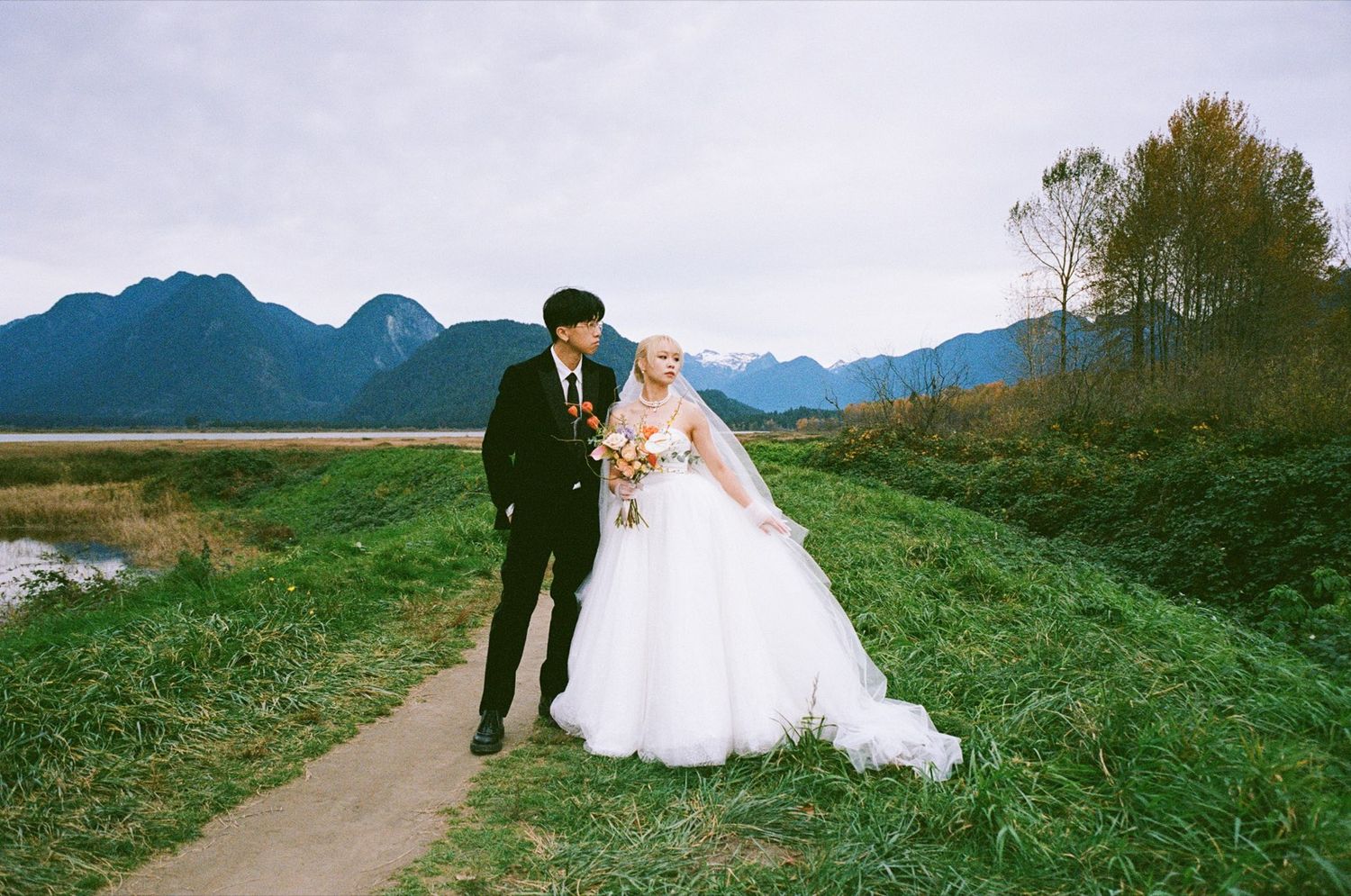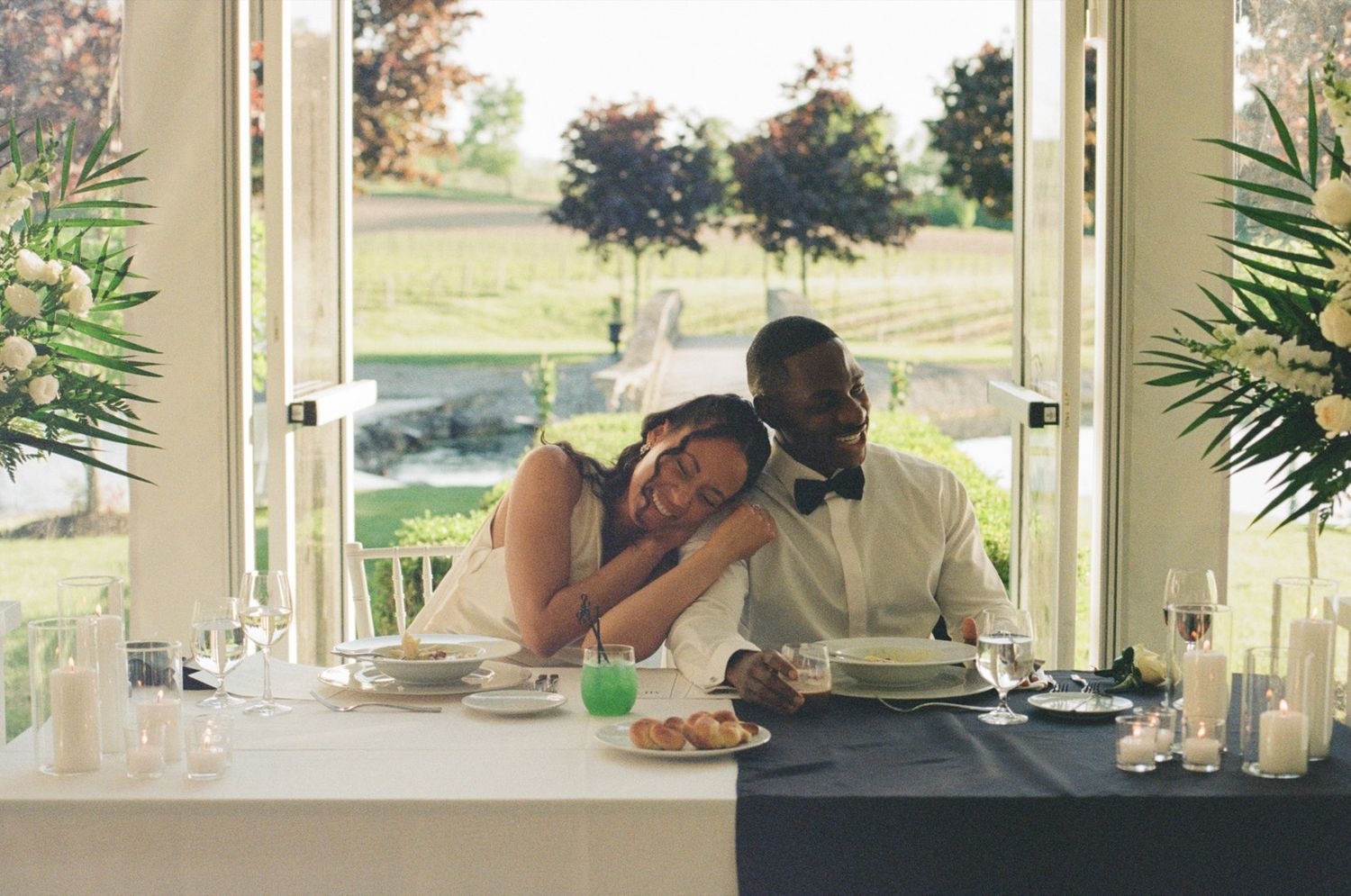
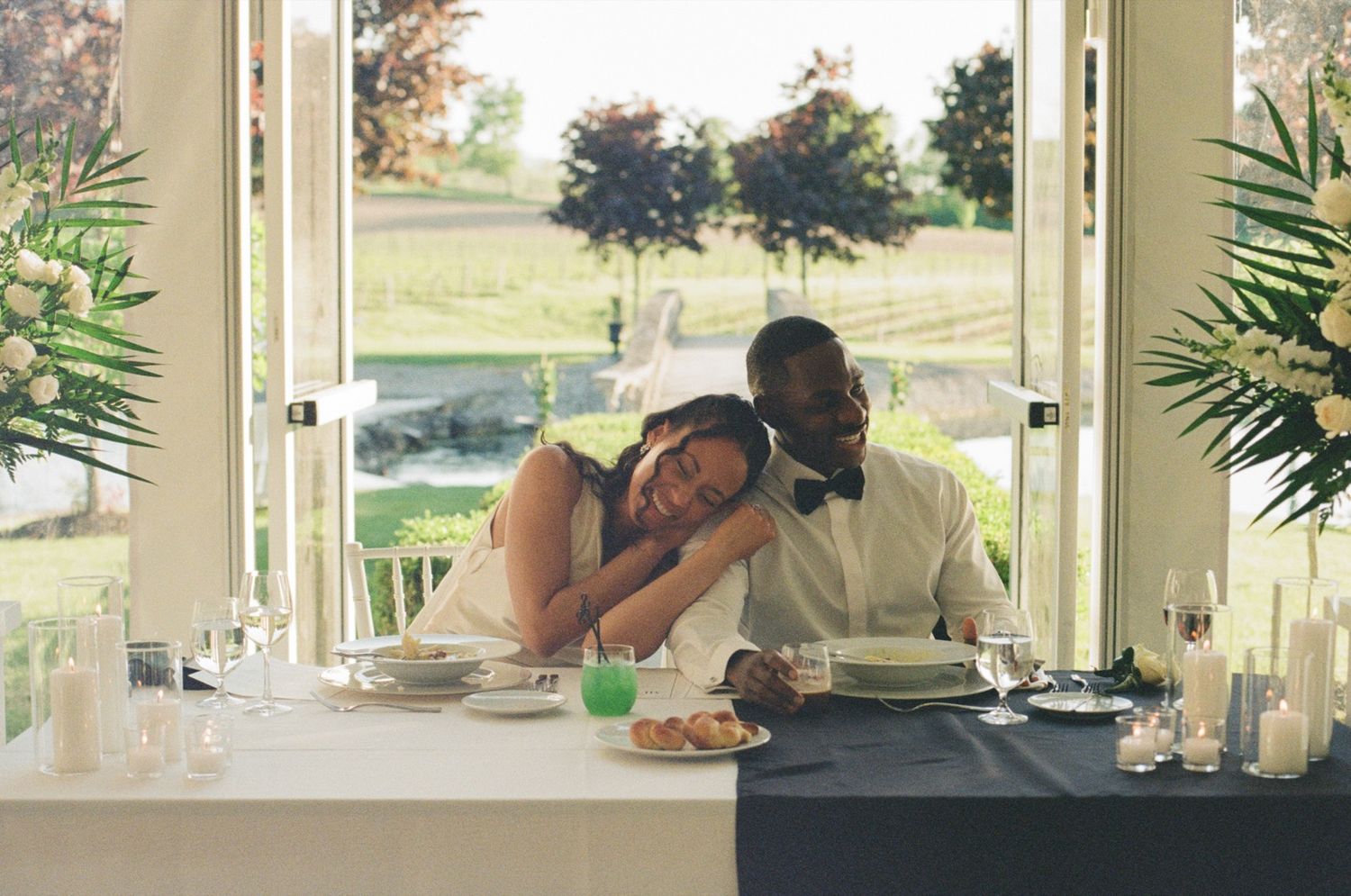
You may love the warmth of 35mm film but still wonder how it fits into a real wedding day.
As a Toronto film wedding photographer, I use film alongside digital coverage to preserve its nostalgic character without missing the moments that cannot be repeated.
Here is what you can expect.
Why I Love Photographing Weddings on Film
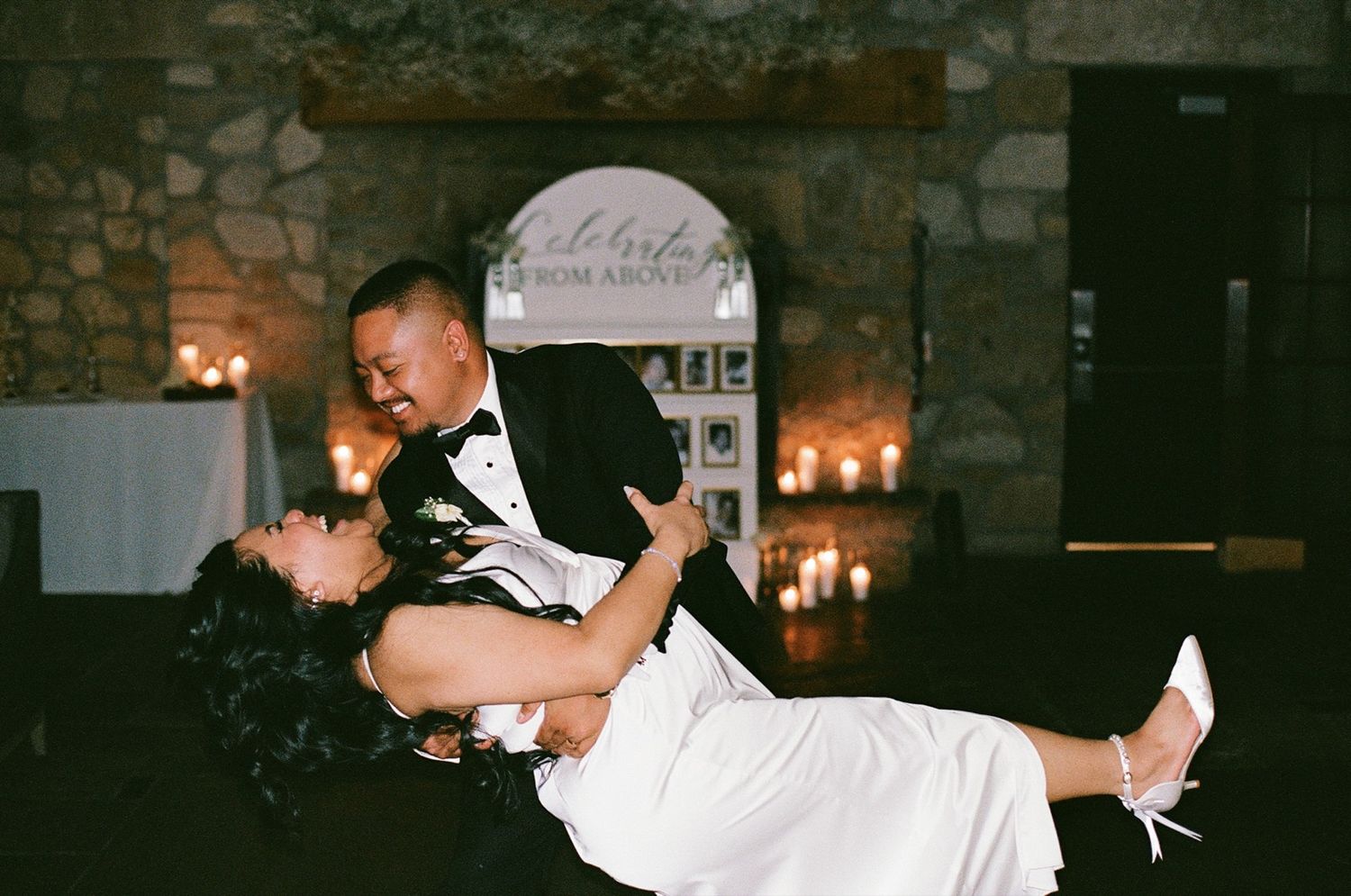
I think part of the reason I love film so much is that it already feels like a memory.
The grain, the colour and the little imperfections remind me of the family albums we used to flip through at home.
Those photographs did not need to be perfect. We loved them because of who was in them and what they brought back.
That is the feeling I want film to add to a wedding gallery.
At ILO Studio, every wedding photography package includes real 35mm film alongside digital coverage. For a full ten-hour wedding day, you will receive at least 50 finished film photographs.
If you want film to play a bigger part in your wedding story, expanded coverage begins with 100 additional images.
Here is how it all works.
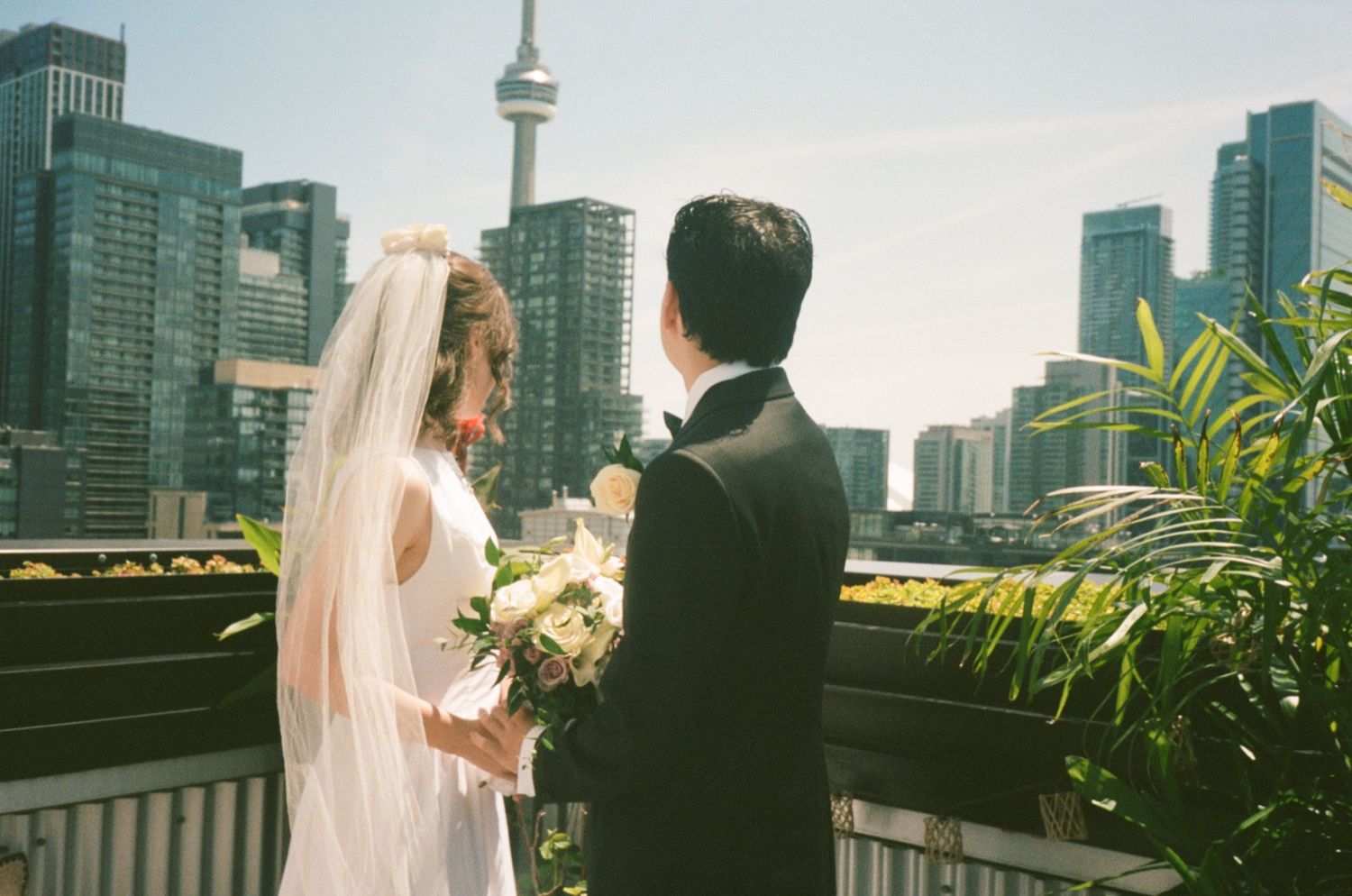
What is 35mm film wedding photography?
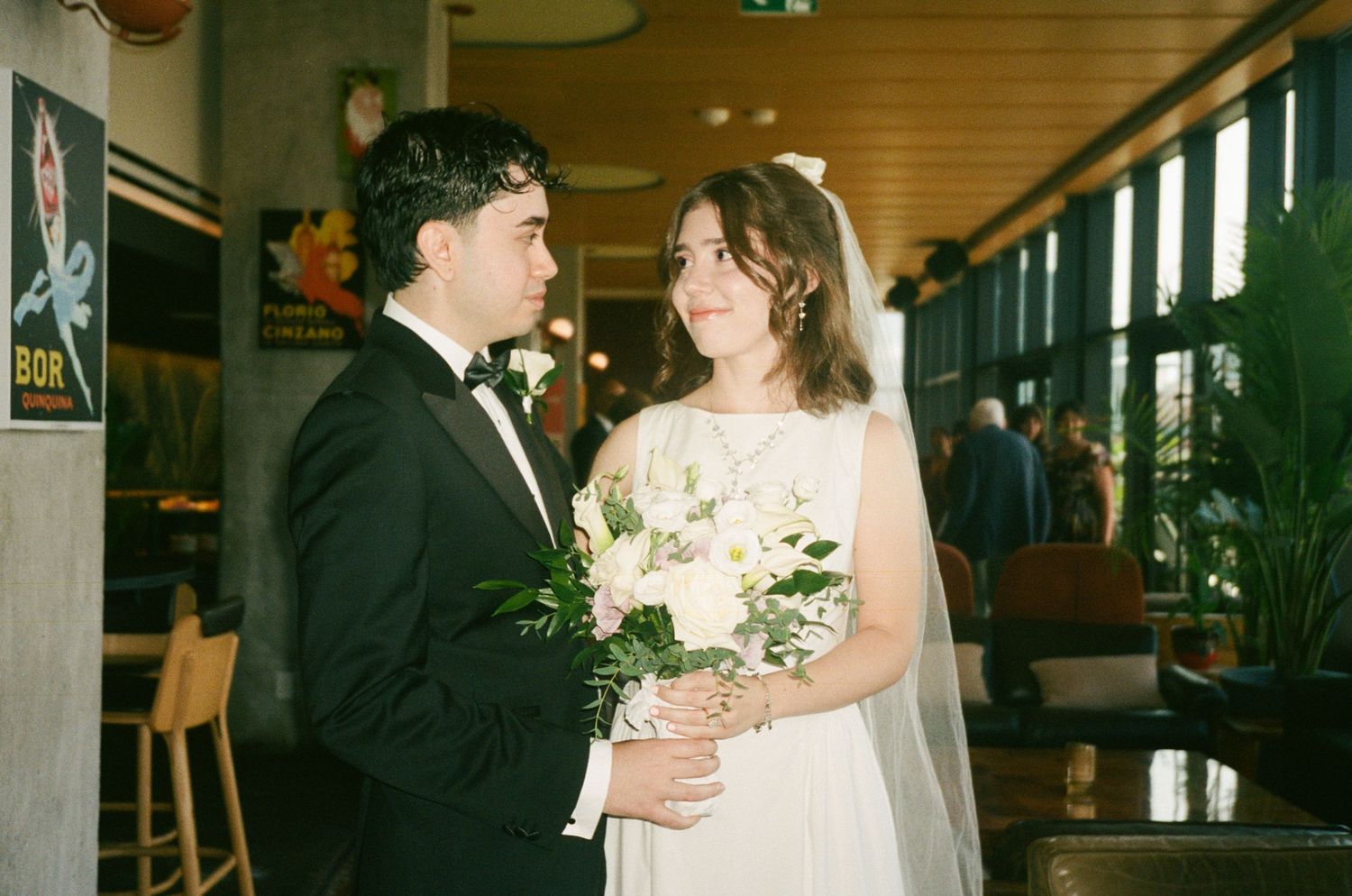
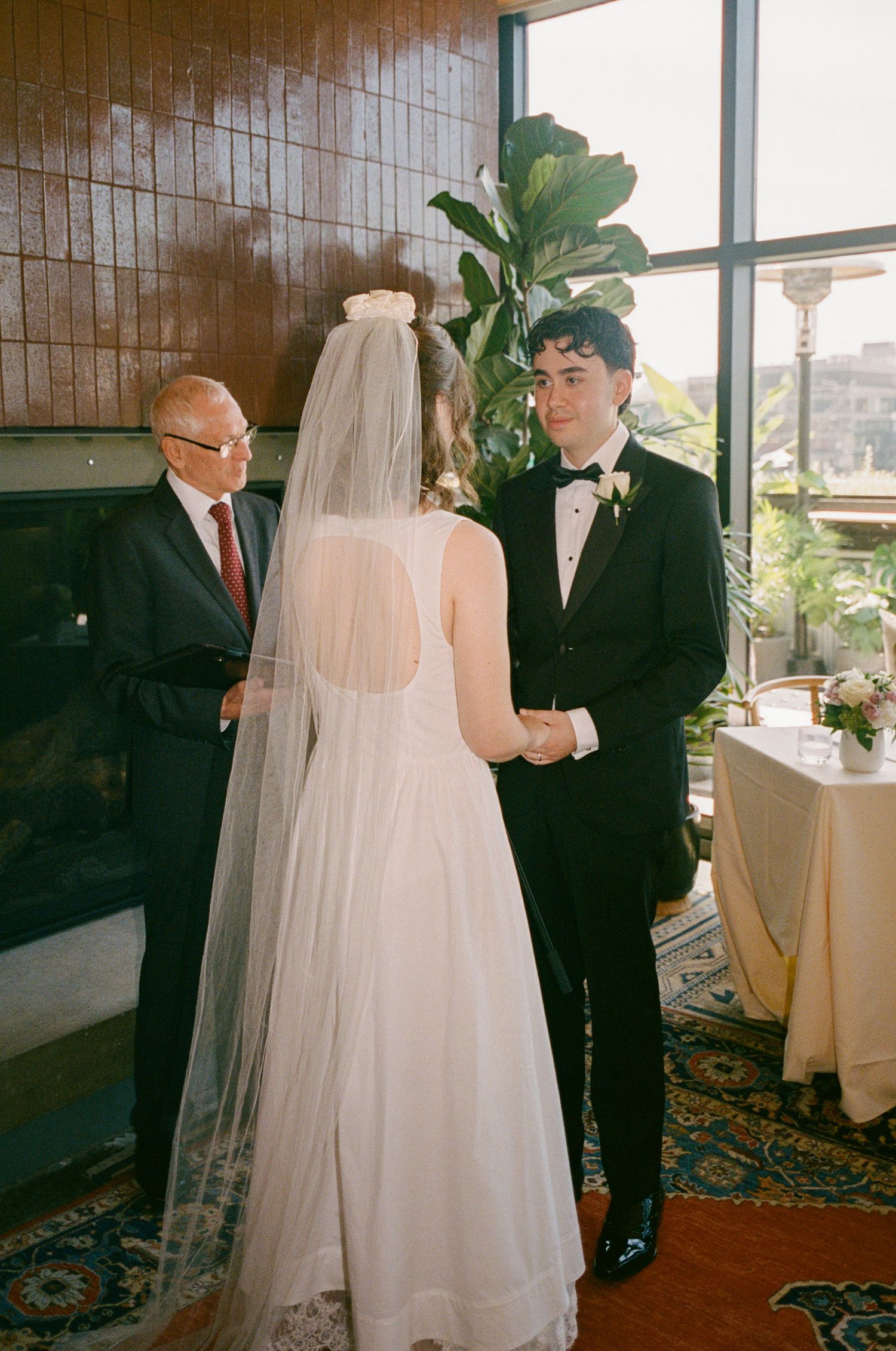
Film photography uses physical film inside an analog camera.
After the photograph is taken, the film must be developed and scanned before the image can be viewed.
Because each roll contains a limited number of photographs, every frame is chosen with intention. Film also responds to colour and light differently from a digital camera, creating natural grain and small variations between images.
It is not a digital filter or preset. The texture and colour come from the film itself and the way it is developed.
How many film photographs will you receive?
Every ILO Studio wedding photography package includes both 35mm film and digital coverage.
With a full-day, ten-hour package, you will receive a minimum of 50 finished film photographs.
If you want more of your wedding documented on film, expanded film coverage begins with at least 100 additional images.
The exact number can vary because every film frame is reviewed before delivery. Your selected film photographs are professionally developed, scanned and placed throughout your digital gallery so the wedding unfolds as one complete story.
Will your entire wedding be photographed on film?
Your wedding will be photographed using both film and digital cameras.
Film is used for moments that suit its colour, texture and slower pace. Digital photography continues throughout the day, especially when events are moving quickly.
This hybrid approach means you can receive real film photographs without sacrificing complete documentation of your wedding.
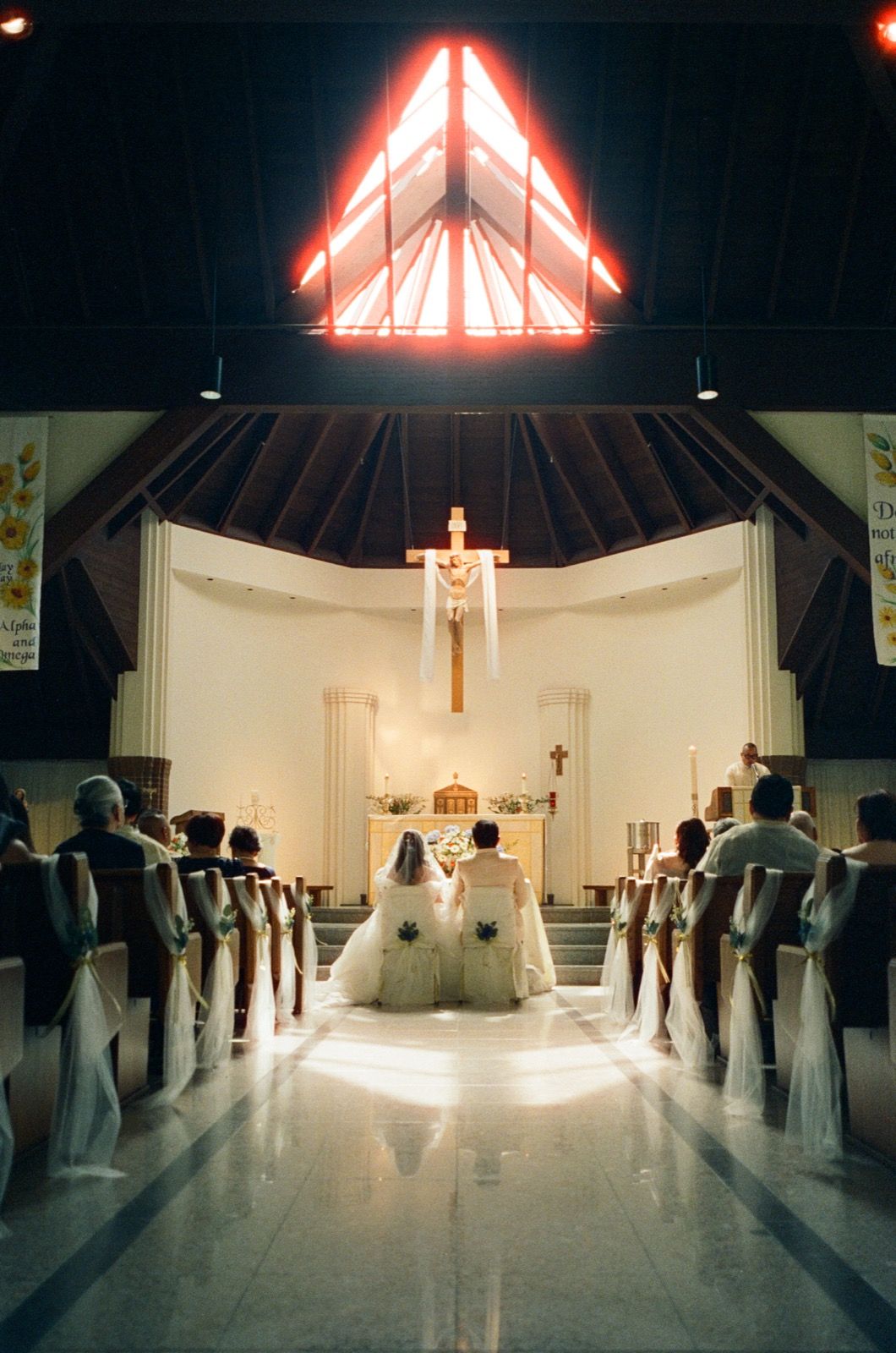
A ceremony, entrance, speech or family reaction cannot be repeated. Digital coverage helps protect those moments, while film adds another layer of feeling to the gallery.
You do not need to decide which camera should be used. That decision is made throughout the day based on the light, movement and importance of the moment.
What parts of your wedding can be photographed on film?
Film can be used during every part of your wedding, from getting ready through the reception.
The difference is not where we use it, but how we use it.
Film is a slower and more intentional process. We cannot take an unlimited number of frames or immediately check the back of the camera. We pay attention, wait and choose the moment carefully.
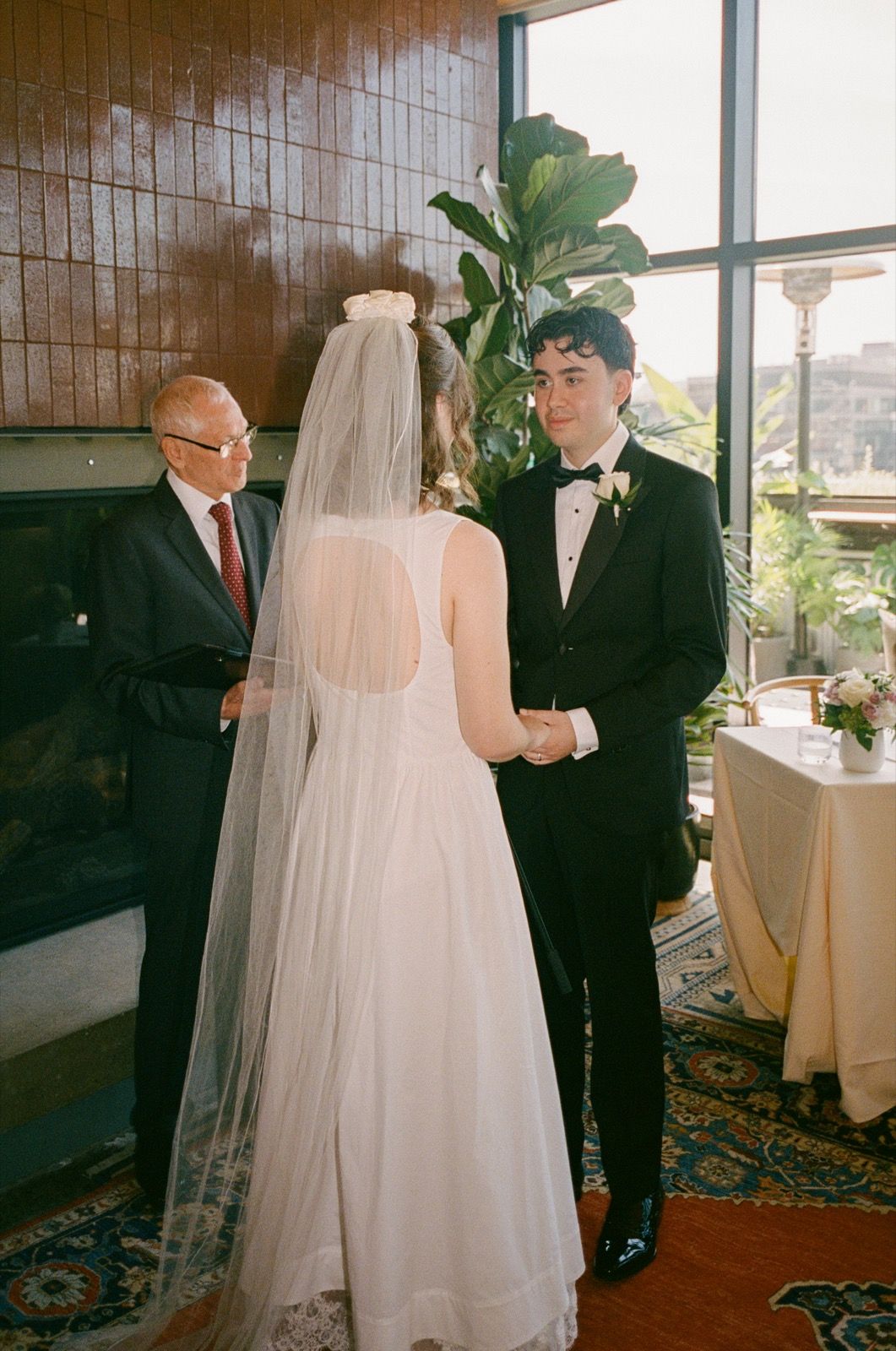
That slower rhythm works especially well for the in-between moments that already feel nostalgic: your parents helping you get ready, friends gathered closely in one room, a quiet look during the ceremony or relatives laughing together between scheduled events.
Film can also be used for portraits, family photographs, cultural traditions, speeches and the dance floor. It is not limited to details or carefully arranged scenes.
We use it wherever the light, movement and feeling of the moment call for it.
What does film add to your wedding photographs?
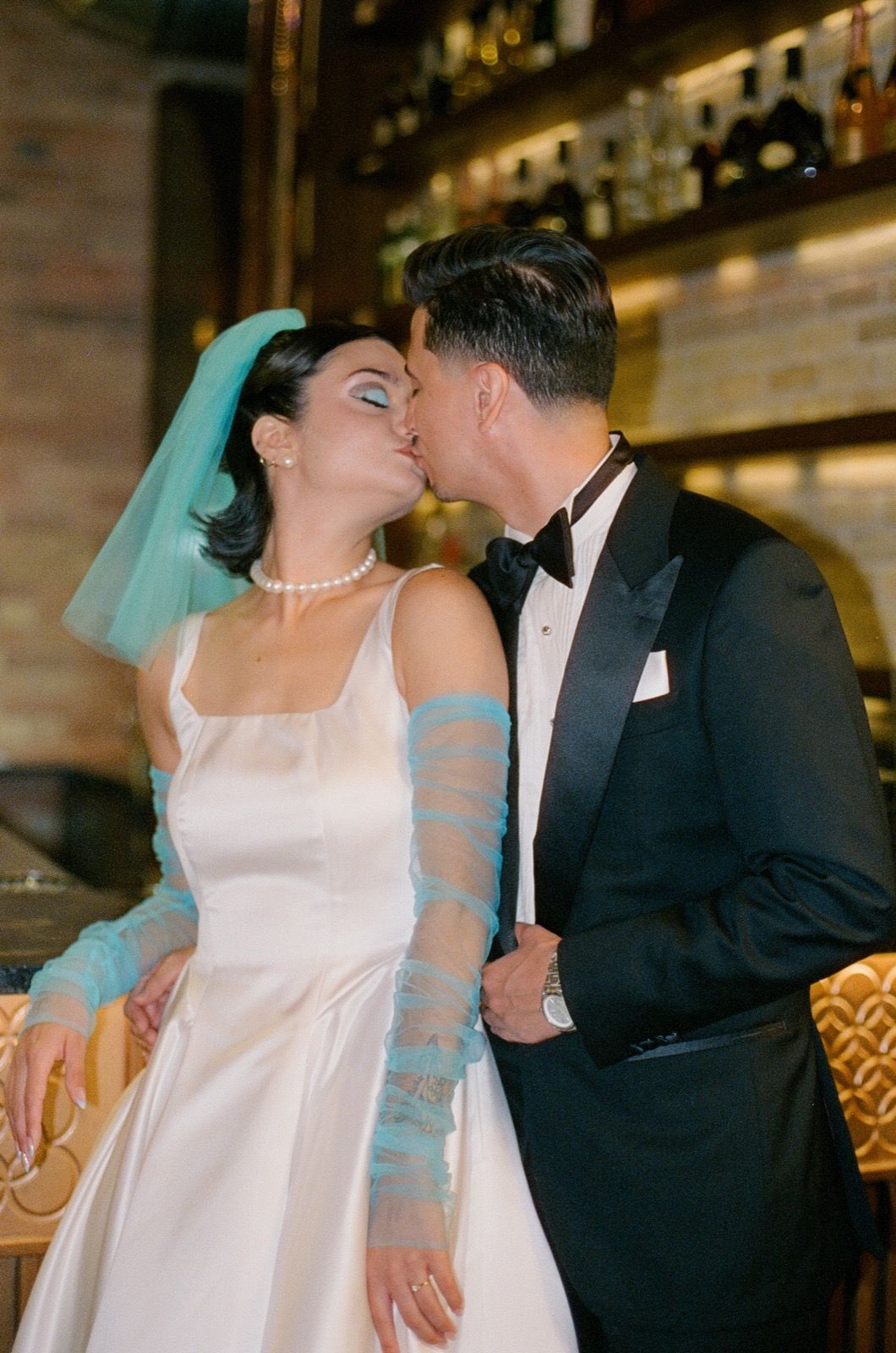
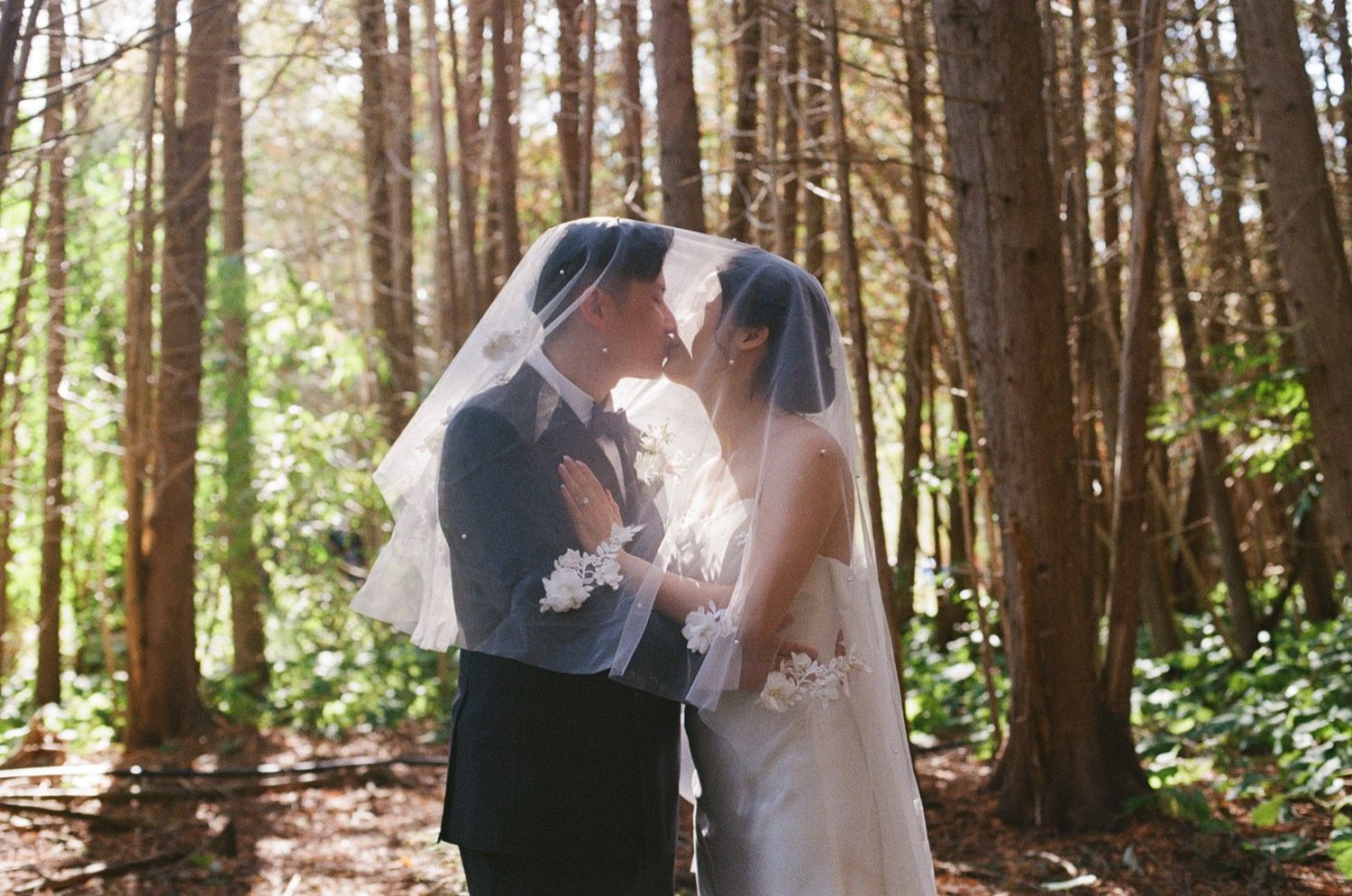
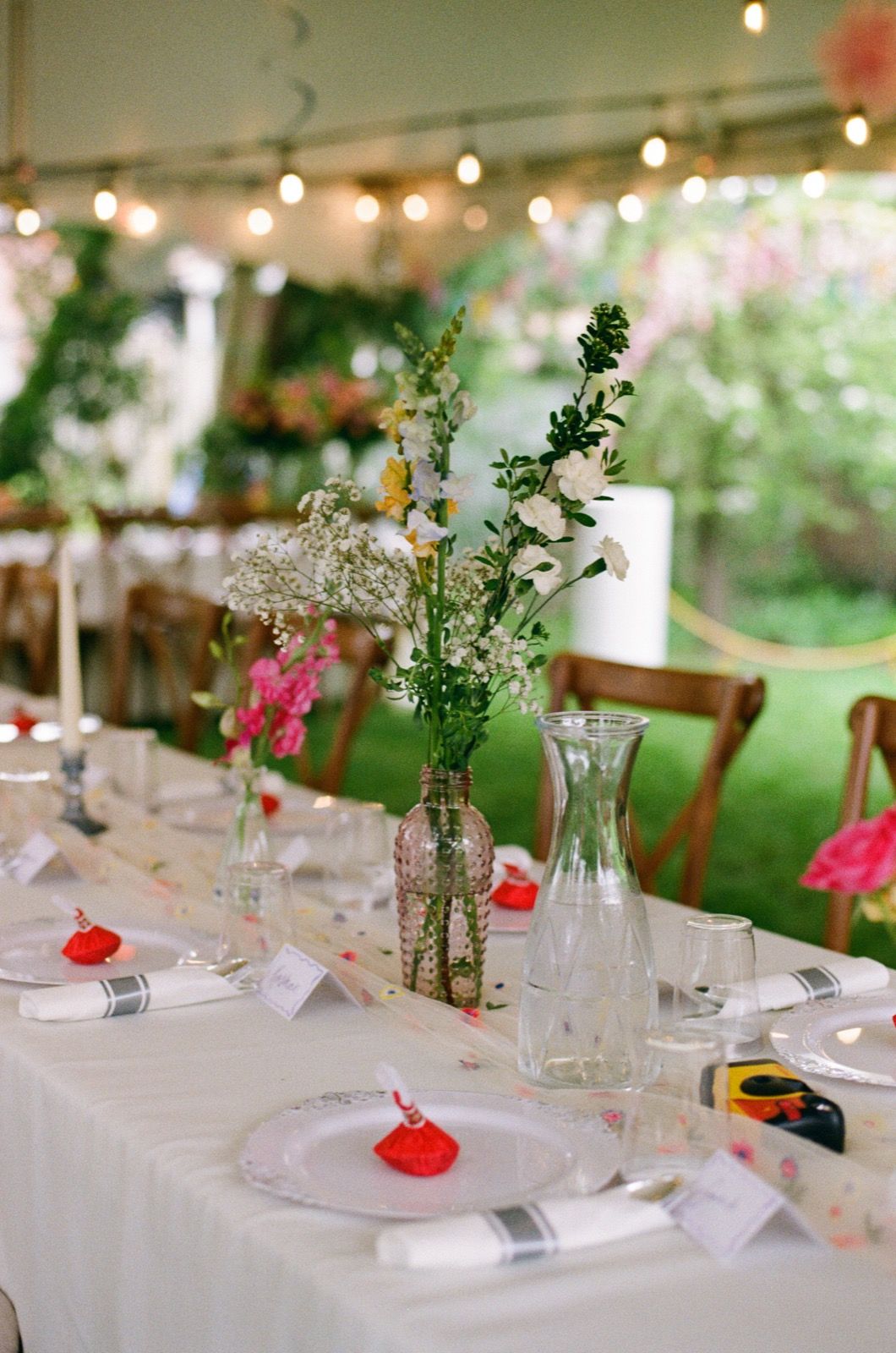
Film gives photographs natural grain, softer colour transitions and a sense of texture.
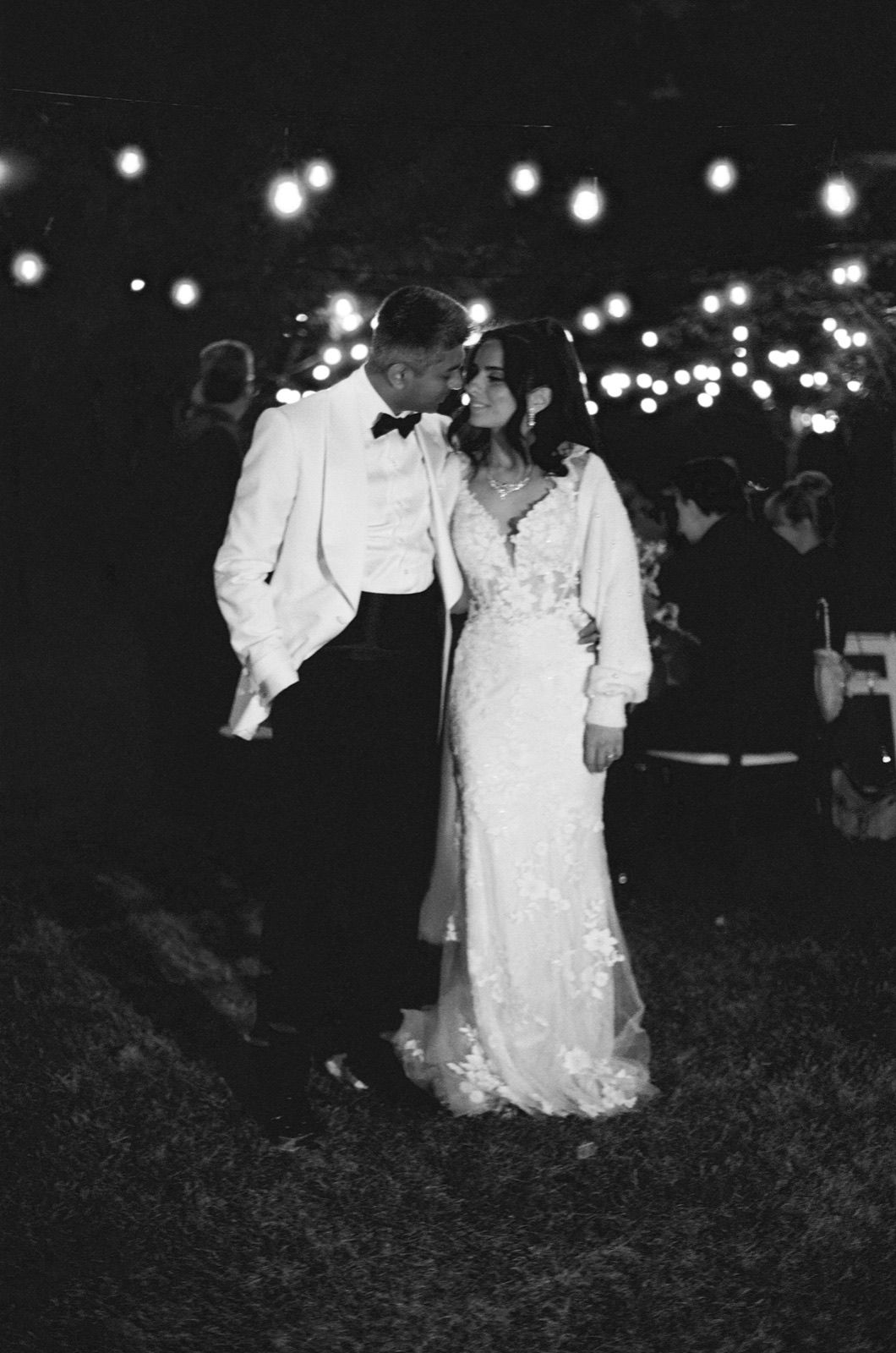
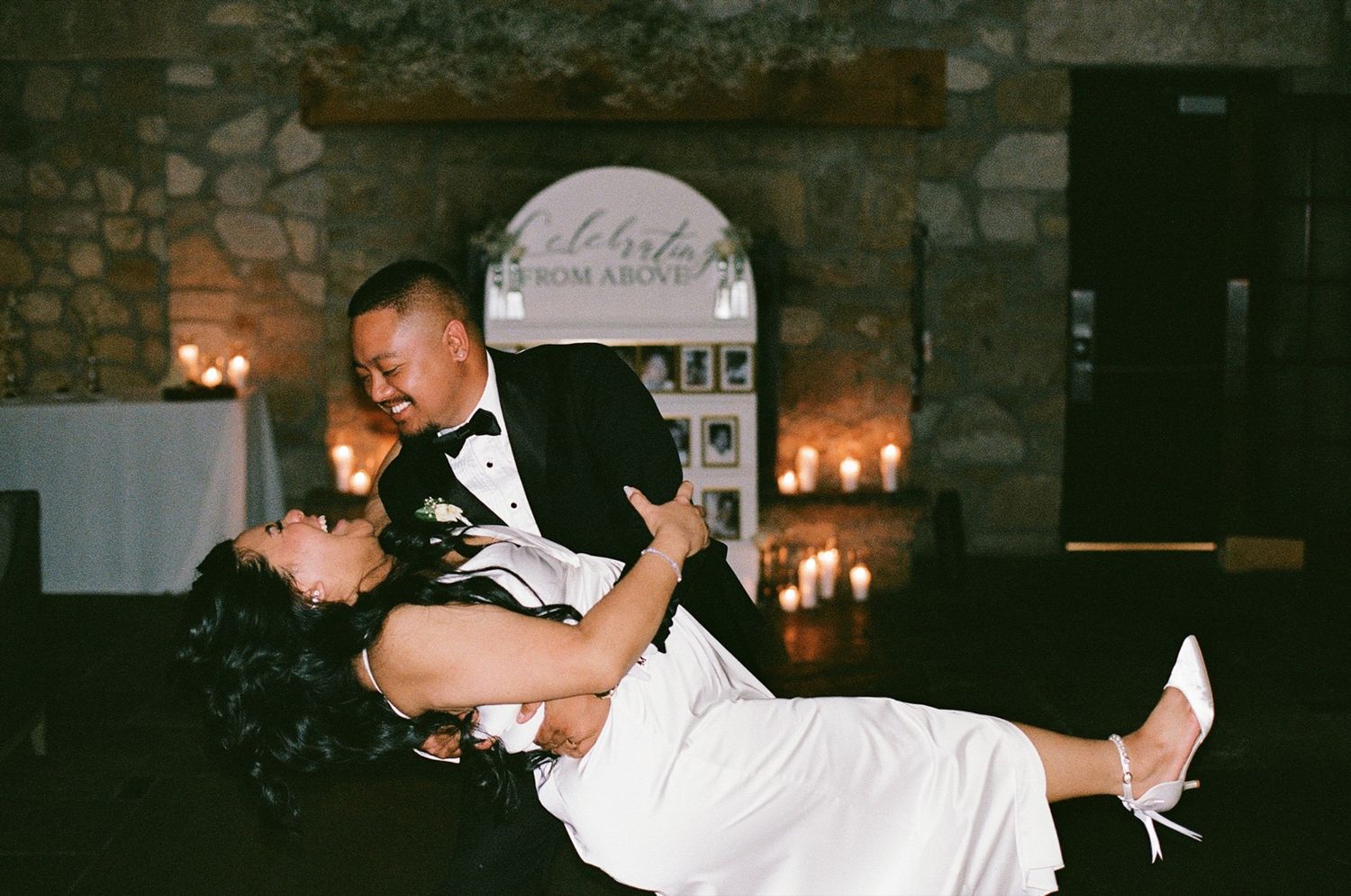
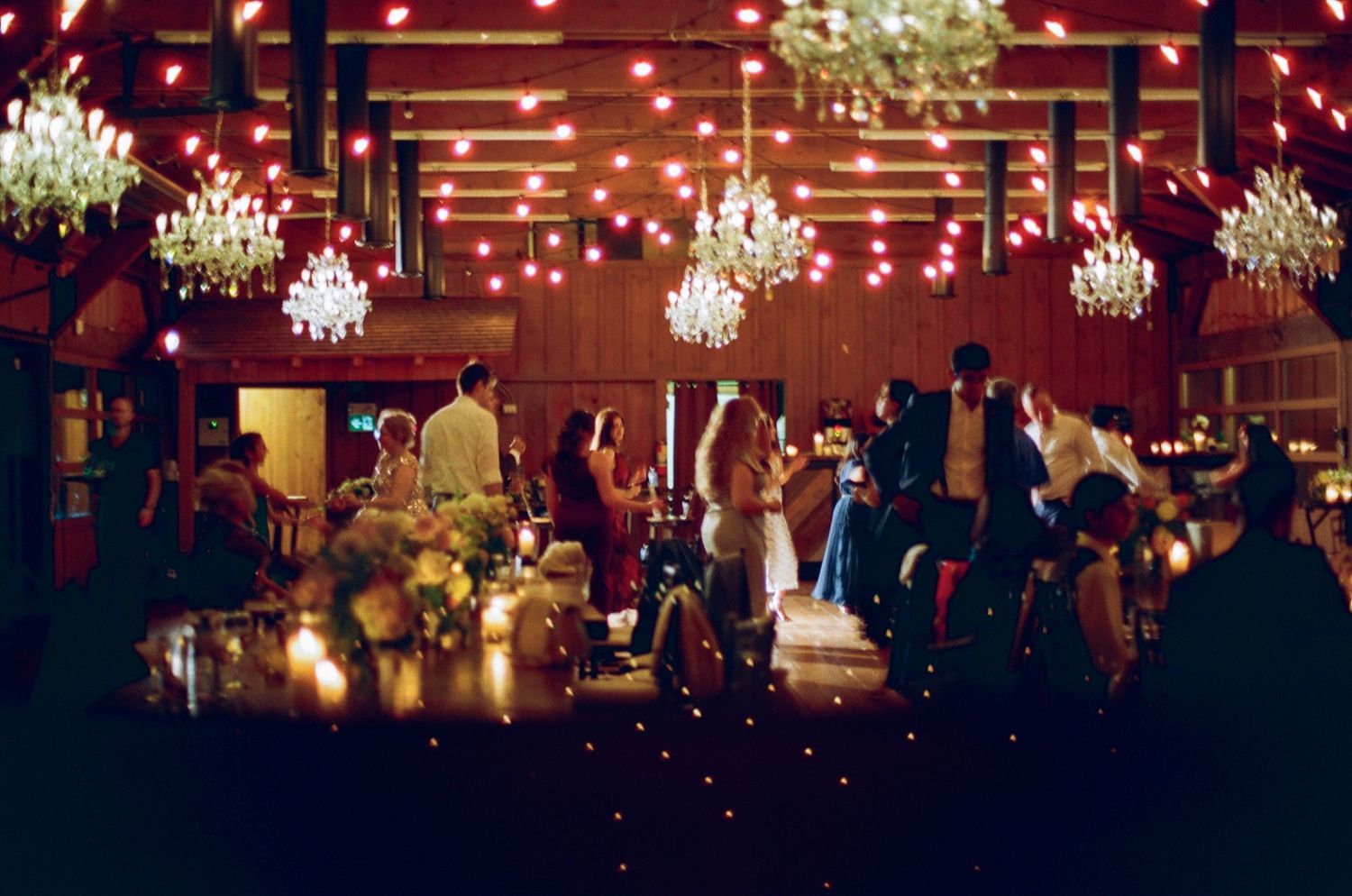
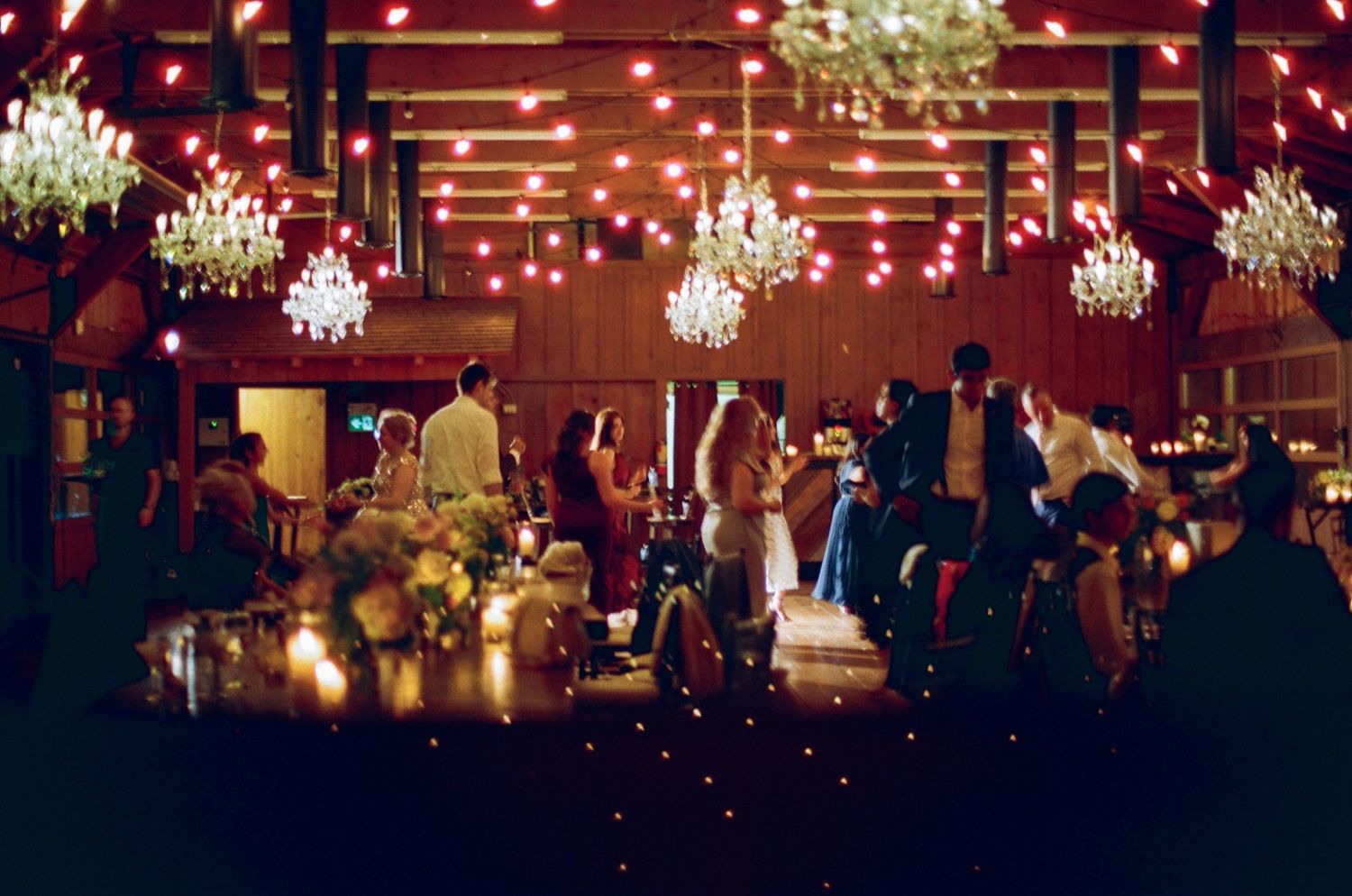
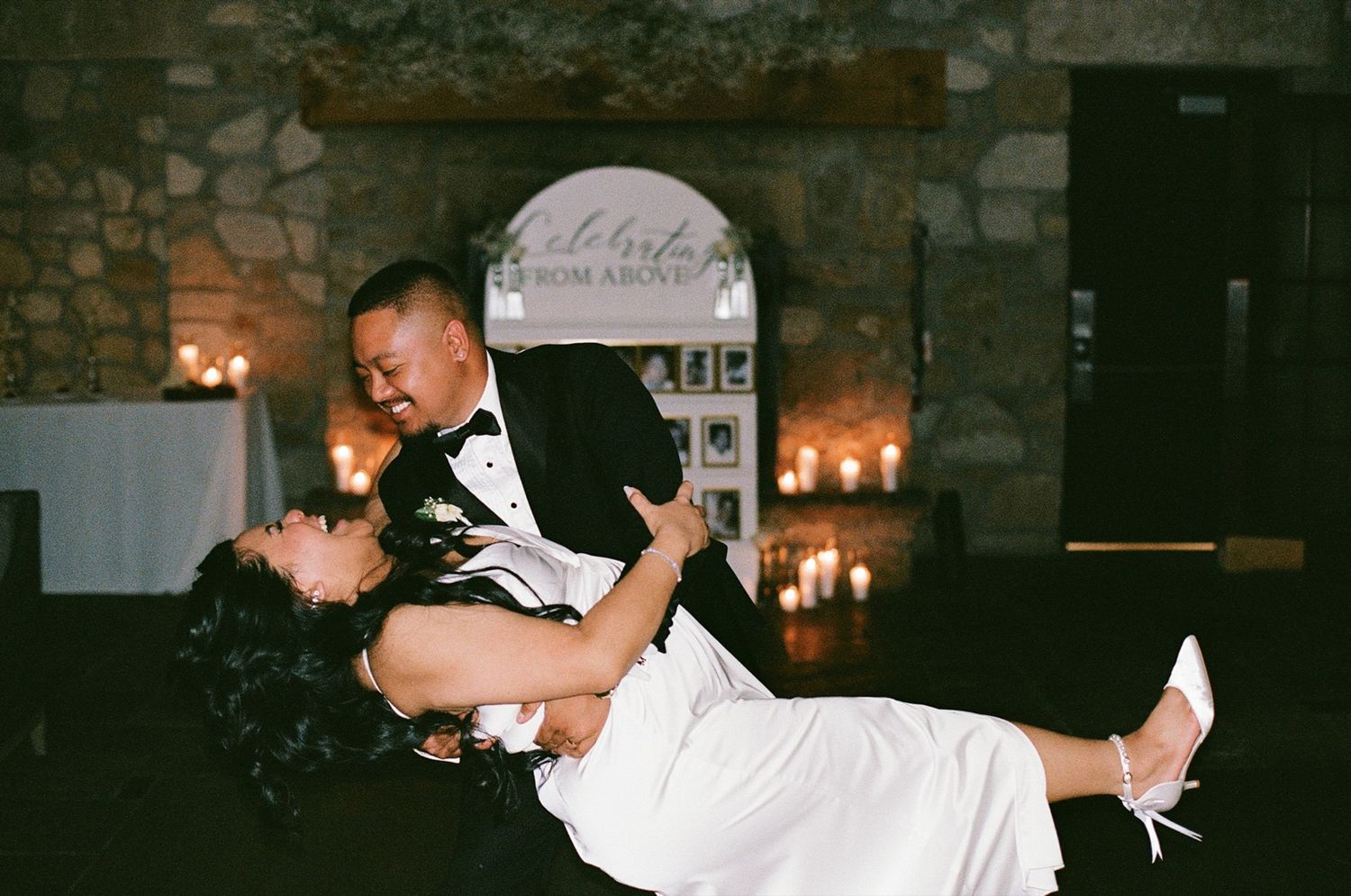
Bright areas can glow, while highlights and points of light may gently bloom instead of appearing perfectly sharp. This can give sunlight, candles, flash and reception lighting a softer, more atmospheric quality.
Film can feel less polished in a familiar way. The result may remind you of childhood photographs or the family albums you looked through before every image was taken on a phone.
Different film stocks respond differently to daylight, indoor lighting, flash, skin tones and colour. Those natural variations become part of your gallery.
For couples drawn to photographs that feel warm, nostalgic and lived-in, real film adds a glow and character that digital editing cannot completely recreate.
Can film be used indoors or in low light?
Yes. Film can be used indoors and during evening receptions.
The film stock and lighting method must be selected according to the room. Window light, higher-sensitivity film and flash can all be used when natural light is limited.
Clarise’s experience as a lighting technician on film and television productions helps us work in difficult spaces without removing the atmosphere that made you choose the venue.
Your indoor photographs should still feel like the room you remember.
Digital cameras continue documenting the celebration when the light changes quickly or becomes less suitable for a particular film stock.
Which film stocks may be used at your wedding?
The film is chosen according to the available light, colours and atmosphere.
ILO Studio commonly works with:
- Kodak Portra 400
- Kodak Portra 800
- CineStill 800
- Kodak Gold 200
- Kodak ColorPlus 200
- Ilford HP5 Plus 400
A bright outdoor portrait, a warm indoor ceremony and a dark reception have different needs.
Some film stocks are selected for natural skin tones and colour. Others are chosen for lower light, stronger grain or black-and-white photographs.
You do not need to select a film stock yourself. It will be chosen according to the conditions and the way each part of your wedding should feel.
Can cultural ceremonies be photographed on film?
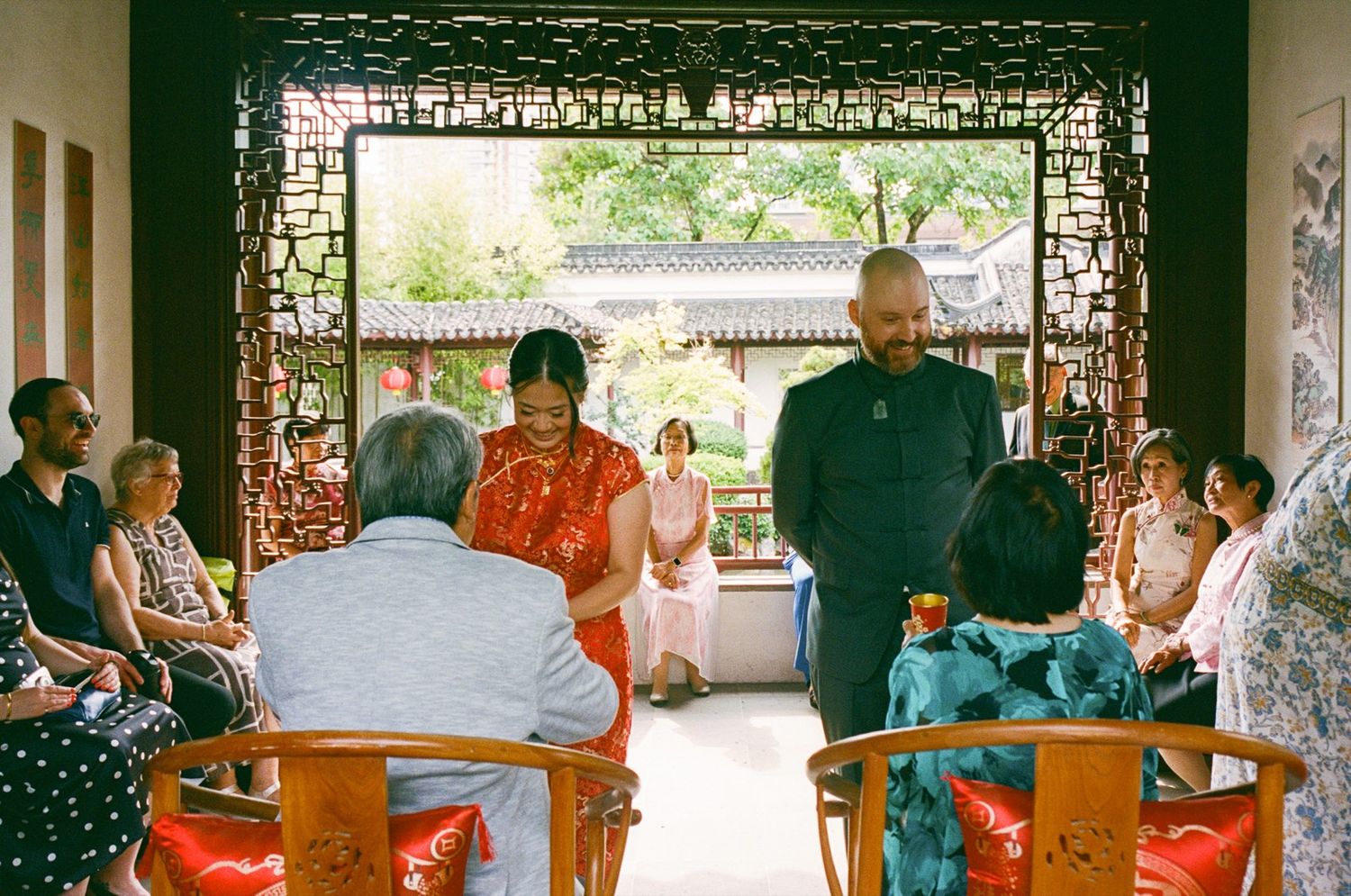
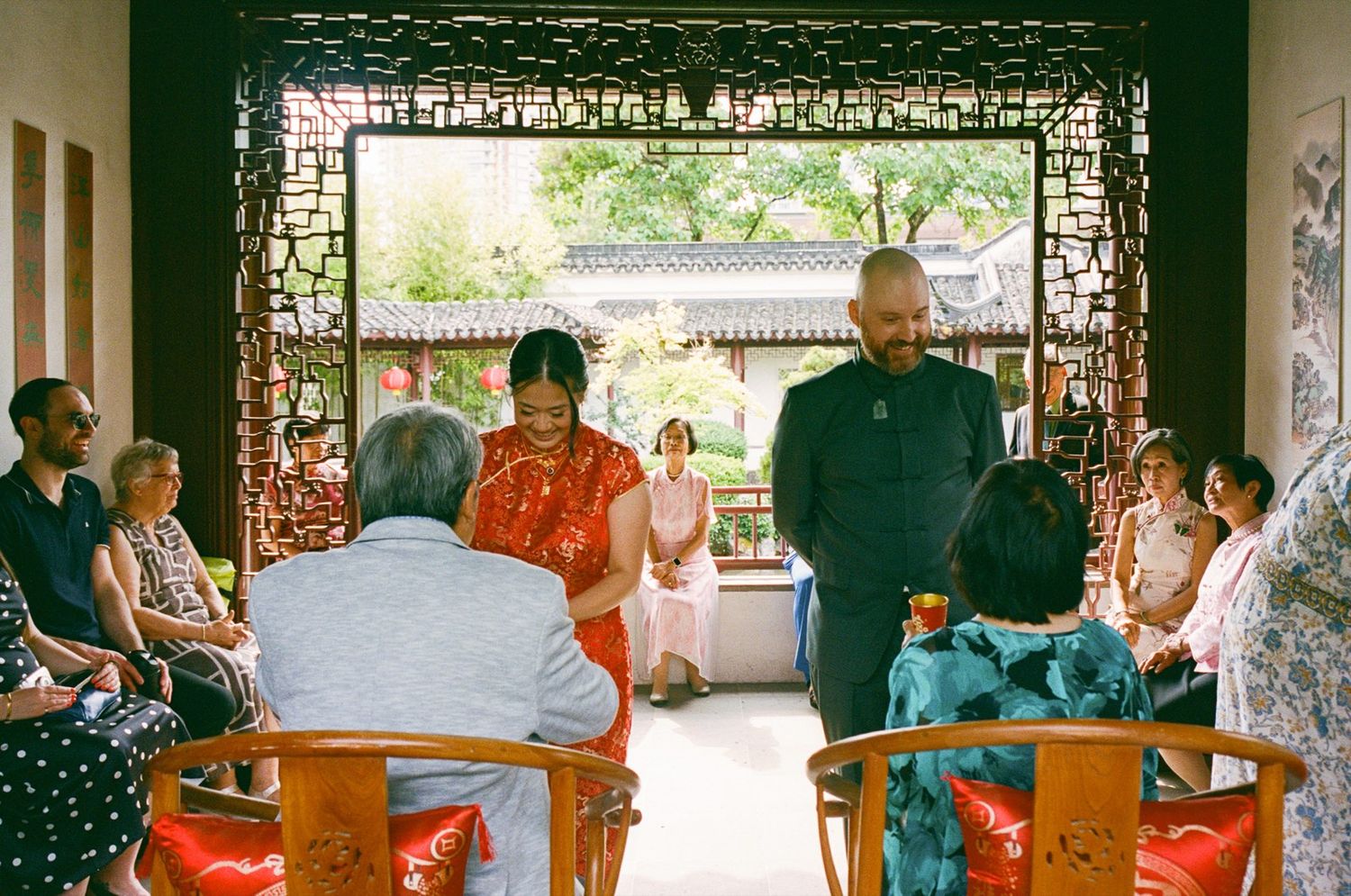
Yes. Cultural ceremonies and traditions can be photographed beautifully on film.
Rich colours, embroidered fabrics, meaningful jewellery and layered details can take on a softness and depth that suit the history and emotion behind them. Bright areas may glow, while candles, flash and small points of light can gently bloom.
These events can also move quickly. Tea may be presented, jewellery exchanged, garments adjusted and several family reactions may happen within a few minutes.
We use film intentionally while continuing digital coverage throughout the ceremony. This allows you to receive the colour, texture and nostalgia of film without missing moments that cannot be repeated.
We have experience documenting Chinese tea ceremonies, Jewish weddings, Nikkah ceremonies and other multicultural celebrations. Before your wedding, we take time to understand the people, traditions and meaningful moments that deserve extra care.
How does film work during a fast-moving ceremony?
Film is used intentionally rather than forcing every part of your ceremony into one format.
Cultural traditions can include several important moments happening close together. Family members may exchange gifts, adjust clothing, offer blessings or react from different parts of the room.
Digital photography helps us document the complete sequence. Film allows us to slow down for the moments where its colour, texture and nostalgic feeling can add something special.
Your ceremony will not be interrupted to create film photographs. We follow what is happening instead of asking the moment to pause for the camera.
Is film wedding photography reliable?
Yes. We photograph with several film cameras throughout the wedding day, rather than relying on one camera.
Our collection includes point-and-shoot cameras, film SLRs and rangefinders. Different cameras suit different moments, lighting conditions and ways of working.
Some of our film cameras have highly reliable metering and focusing systems, helping us work accurately when the light or pace of the wedding changes.
We also carry backup camera bodies and continue photographing digitally throughout the day. This lets us use film confidently while protecting the important moments that cannot be repeated.
How is your wedding film developed?
Our film is developed and scanned by Graination Film Lab in Toronto.
When I moved to Toronto, I tested almost every local film lab because I wanted to understand how each one handled colour, scanning and consistency. Graination gave me the most reliable and consistent results, which is why I trust them with our couples’ wedding photographs.
Their film is processed in-house using professional Colenta processors. Graination also performs daily quality checks using densitometers and spectrometers to monitor its chemistry and colour precision.
Their standard turnaround time is next day for colour, black-and-white, slide and motion-picture film. During the busy wedding season, processing may take up to three days depending on the lab’s current volume.
Once the scans are ready, we review every frame and select the finished photographs for your gallery. The lab’s processing time is separate from the delivery timeline for your complete wedding gallery.
Is real film different from a film-style digital edit?
Yes.
A digital photograph can be edited with grain, softer contrast and colours inspired by film. It can look beautiful, but it is still a photograph captured on a digital sensor.
Real film is created through a physical process. Light exposes the film inside the camera before it is developed with chemistry and scanned.
Film also responds to colour, highlights and movement in its own way. Grain occurs naturally. Bright areas may glow, and points of light can gently bloom.
We use film and digital together because each format holds a moment differently. Digital gives us speed and flexibility. Film adds natural variation, texture and character.
Is film wedding photography right for you?
Film may feel right for you if:
- You love old family photographs
- You want your gallery to feel warm and lived-in
- You appreciate grain, glow and small imperfections
- You care about colour, atmosphere and movement
- You want candid moments with thoughtful direction
- Family and cultural traditions matter deeply to you
- You want to enjoy your wedding instead of performing for the camera
- You like the idea of film and digital photographs living together
You do not need to understand film cameras or know which film stock you prefer.
You only need to recognize how you want your photographs to feel when you return to them years from now.
What should you ask a film wedding photographer?
If film is important to you, the questions below can help you understand what is included and how your photographs will be handled. You do not need to ask every question, focus on the details that matter most to you.
- Is film included in the package?
- How many finished film photographs should you expect?
- Will your wedding also be documented digitally?
- Can you see a gallery containing both formats?
- Do they have experience photographing film indoors and in low light?
- Does their photography style look consistent across film and digital?
- Who develops and scans their film?
- How will the finished photographs be delivered?
- Are physical negatives included?
- Have they photographed cultural traditions similar to yours?
Pay particular attention to how their film and digital work look together.
The two formats will never appear completely identical, and that natural variation is part of their character. However, the colour, mood and overall approach should still feel connected.
Your final gallery should feel like one wedding story, not two unrelated photography styles placed together.
Looking for a Toronto film wedding photographer?
Film is not for everyone, and that is part of what makes it special.
It may be right for you if you care less about every photograph being perfectly polished, and more about how your wedding felt. If you love old family albums, honest colour, natural grain and the small moments happening around the people you love, we may be a good fit.
Our couples want beautiful photographs, but they do not want to spend their wedding performing for the camera. They care about family, tradition and being present while the day unfolds.
If that sounds like you, tell us about the people you are bringing together and the memories you hope to return to years from now.